
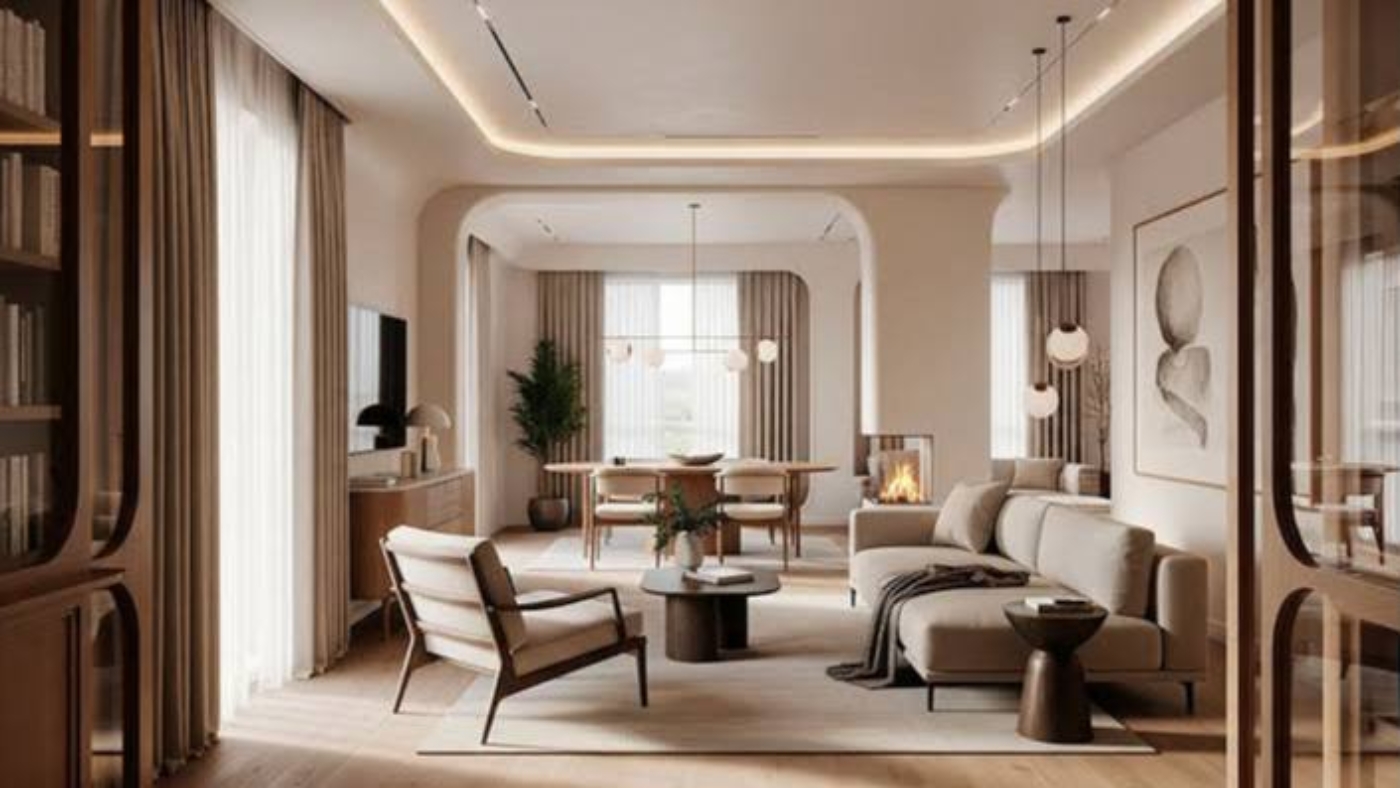
The age of a property does not always match the way it feels in terms of relevance and modernity. A newly built house may already feel outdated within a few years if its architecture relies on temporary trends, weak layouts, and low-quality visual solutions, while a property with history can feel highly contemporary thanks to strong proportions, quality materials, and intelligent adaptation to today’s lifestyle. At RentSale RealEstate, architect Raúl Llorente notes that the true modernity of real estate is determined not by the year of construction, but by how functional, aesthetically precise, and adaptable the space remains as buyer needs continue to evolve.
The first criterion is architectural foundation. Older buildings often have strong advantages in ceiling height, wall thickness, larger windows, clear structural axes, expressive facades, and more generous room proportions. If this foundation has been preserved and not damaged by poor renovations, such a property can deliver a stronger sense of quality than new real estate built with standard layouts and minimal architectural character. In this context, modernity is not about the age of the walls, but about the building’s ability to remain beautiful, intuitive, and comfortable without excessive decorative effort.
The second factor relates to layout. Many newly developed properties appear visually fresh but suffer from narrow rooms, long corridors, weak storage, small kitchens, and poor relationships between living zones. An older property that has undergone thoughtful renovation may offer a far more flexible scenario: a spacious living room, dedicated office, logical zoning, comfortable bedrooms, and adaptability for family living, rental income, or resale. At RentSale RealEstate, we analyze not the year a building was constructed, but the usefulness of the space – how many square meters genuinely work in daily life and how many exist only on paper.
Materials also heavily influence how age is perceived. Natural stone, wood, high-quality ceramics, solid doors, durable staircases, and strong joinery can age gracefully when properly maintained or upgraded. Cheap finishes in a new house, by contrast, often lose freshness quickly through chips, wear, visual fatigue, and a temporary appearance. A property feels modern not because everything is new, but because materials preserve form, texture, and dignity after years of use.
Technical modernization must also be considered. An older house can become highly competitive if its electrical systems, ventilation, heating, windows, plumbing, sound insulation, and security infrastructure have been upgraded. Without this, historical charm quickly becomes a source of expensive problems. But when the engineering systems meet current standards, the property gains a rare combination of character and comfort. At RentSale RealEstate, we emphasize that strong renovation should not erase a building’s age – it should eliminate technical weaknesses while preserving architectural identity.
Design ages faster than architecture. Trend-driven colors, complex decorative panels, random textures, excessive lighting, and aggressive furniture can make even a new property feel visually outdated. Restrained palettes, clean lines, quality lighting, balanced furniture proportions, and respect for original architecture remain relevant far longer. That is why an apartment in an older building, after precise modernization, can feel calmer, more expensive, and more contemporary than a new property overloaded with fashionable but quickly exhausting design choices.
Market value depends heavily on buyer perception. If an older building creates a sense of reliability, silence, spaciousness, historical character, and intelligent modernization, buyers often perceive it as a unique opportunity. If a new property feels generic, has poor acoustics, overheated rooms, tight spaces, and short-lived materials, its recent construction year stops being a meaningful advantage. At RentSale RealEstate, we believe buyers increasingly evaluate not the calendar age of a house, but the age of its decisions – whether those decisions still meet today’s standards of comfort.
Investment logic is changing as well. Older properties in strong locations can offer significant growth potential if they can be modernized without losing their character. After high-quality renovation, they become highly attractive to buyers seeking something more distinctive than mass-market real estate. However, limitations must be carefully evaluated: heritage status, renovation restrictions, structural condition, maintenance costs, and redevelopment possibilities. Without proper analysis, an older property can become not an opportunity but an expensive project with an unpredictable budget.
Ultimately, modernity in real estate is defined by the balance between architectural foundation, technical condition, design quality, and the ability of the space to support real-life scenarios. An older house can feel more relevant than a new one if it offers strong proportions, quality light, durable materials, silence, character, and intelligent modernization. At Rent Sale Real Estate, we see this as an important conclusion for today’s market: buyers should look not only at the construction date, but at how well a property has aged and how confidently it can perform in the future.
Previously, we wrote about how RentSale RealEstate analyzes current real estate market trends, changes in architecture, buyer demand, and evolving investment models