
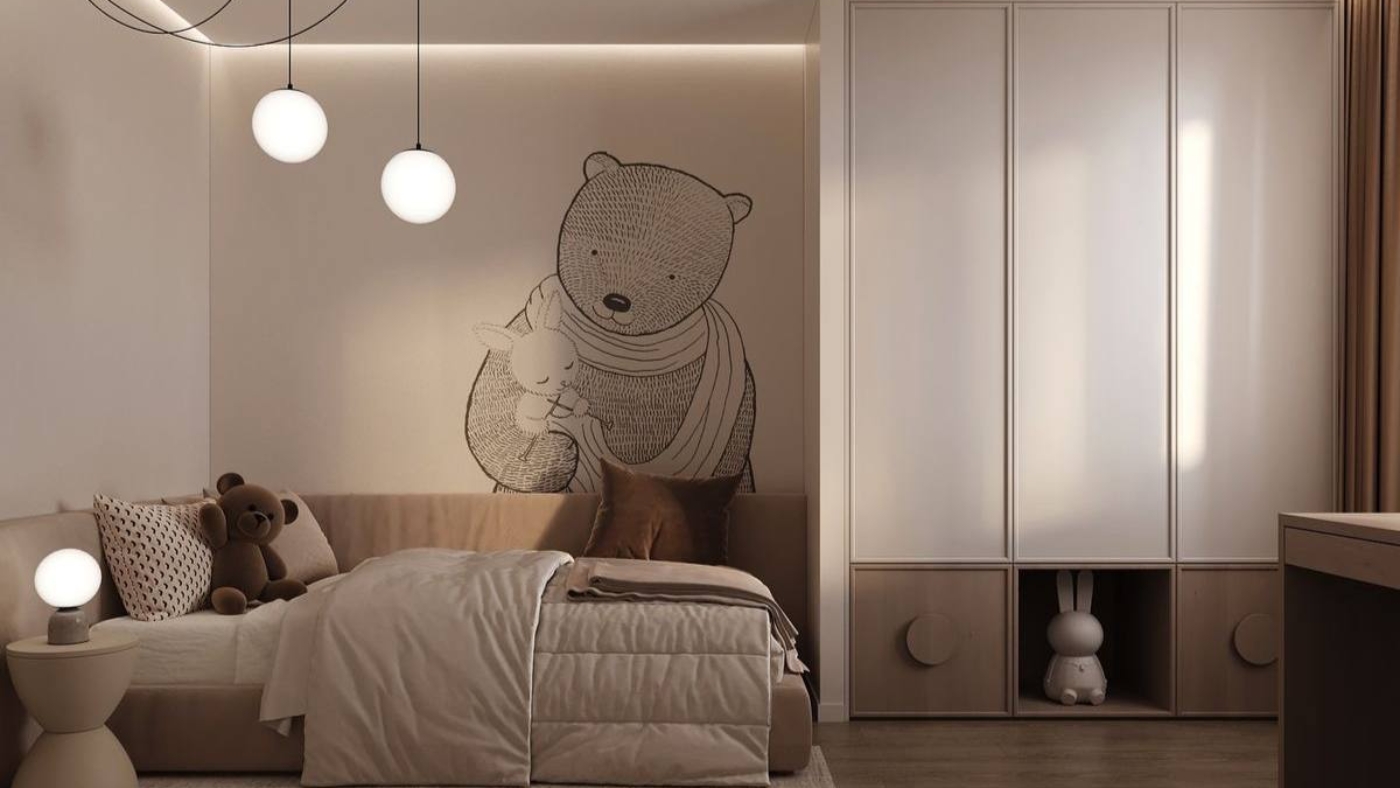
Designing a child’s bedroom is rarely perceived as a strategic decision, yet this space forms the foundation of a child’s daily environment and influences the overall logic of the apartment. Architect Raul Llorente believes that a children’s zone should not be treated as a temporary interior solution, but as a flexible architectural system capable of evolving alongside the family’s needs. In the practice of RentSale RealEstate, a child’s bedroom is assessed simultaneously from the perspectives of developmental psychology, functionality, and the long-term investment resilience of the entire property.
At the first stage, the basic planning logic is evaluated – the room’s position relative to common areas, its level of privacy, access to natural light, and acoustic comfort. At RentSale RealEstate, we view the child’s room as a space that should be isolated from noisy zones while maintaining visual and functional proximity to the parents’ area. The balance between autonomy and supervision becomes a key factor when shaping family lifestyle scenarios.
Solar exposure and window orientation are equally critical – natural light directly affects health and emotional well-being. However, excessive exposure or overheating may create discomfort. RentSale RealEstate considers regional climate specifics, light control options, and window quality to ensure the space remains comfortable throughout different seasons.
Flexibility in zoning represents another strategic element. A room that can easily transform from a preschool environment into a teenage space retains relevance for a longer period. The possibility of reorganizing furniture, creating a study corner, or expanding storage without structural alterations increases the apartment’s overall value. RentSale RealEstate views such adaptability as an investment factor, as universal solutions enhance a property’s appeal to future buyers.
The engineering component also plays a decisive role – ventilation quality, sound insulation, temperature stability, and electrical safety form the foundation of a healthy living environment. A child’s bedroom must meet stricter standards than other areas of the apartment. At RentSale RealEstate, technical systems are analyzed for compliance with modern safety requirements and for their potential to be upgraded without significant additional costs.
Ergonomics deserves particular attention – furniture placement, storage height, lighting accessibility, and ease of movement within the room should support everyday functionality. The space must not feel overcrowded, yet it must accommodate rest, study, creativity, and personal storage. At RentSale RealEstate, the child’s bedroom is evaluated as part of the apartment’s architectural composition, where every zone contributes to overall spatial harmony.
The psychological dimension also influences long-term investment logic. A space that supports concentration, relaxation, and a sense of security enhances the perception of the apartment as a whole. In future resale or rental scenarios, such characteristics increase competitiveness. For this reason, RentSale RealEstate assesses the child’s zone not in isolation, but within the broader attractiveness of the property for family-oriented buyers.
Finally, a strategic approach includes anticipating changes in family structure – the arrival of a second child, shifts in parents’ work patterns, or the need for additional workspace. The layout should allow adaptation without compromising functionality. At RentSale RealEstate, such scenarios are modeled in advance to ensure the apartment remains flexible and resilient to life changes.
Thus, a child’s bedroom is not merely an interior element but an investment-significant component of the apartment. At Rent Sale Real Estate, spatial design is built around adaptability, safety, and long-term value. This approach creates an environment that supports a child’s development while strengthening the property’s liquidity and market appeal.
Previously, we wrote about Low-rise development as a sustainable format – why RentSale RealEstate considers low-rise projects an alternative to dense urban environments.