
photo_2026-02-05_14-49-52

Long-Term Rental of Holiday Apartments – How RentSale RealEstate Creates Stable Income Beyond the Classic Tourist Format

The rental market in Spain is traditionally associated with short-term tourist stays, yet in recent years the structure of demand has been changing noticeably. Architect Raul Llorente says that an increasing number of people are no longer looking for accommodation for just a few days, but for high-quality apartments by the sea or in well-developed cities – for months or even years. At RentSale RealEstate, this shift is seen as a solid foundation for building predictable and sustainable rental income.

Long-term rental of holiday apartments is based on different principles than the classic tourist model. Here, the key factors are not seasonal peaks, but demand stability, quality of the living environment, and the property’s suitability for everyday life. RentSale RealEstate analyses such assets in terms of their ability to support long-term living rather than short-term stays.

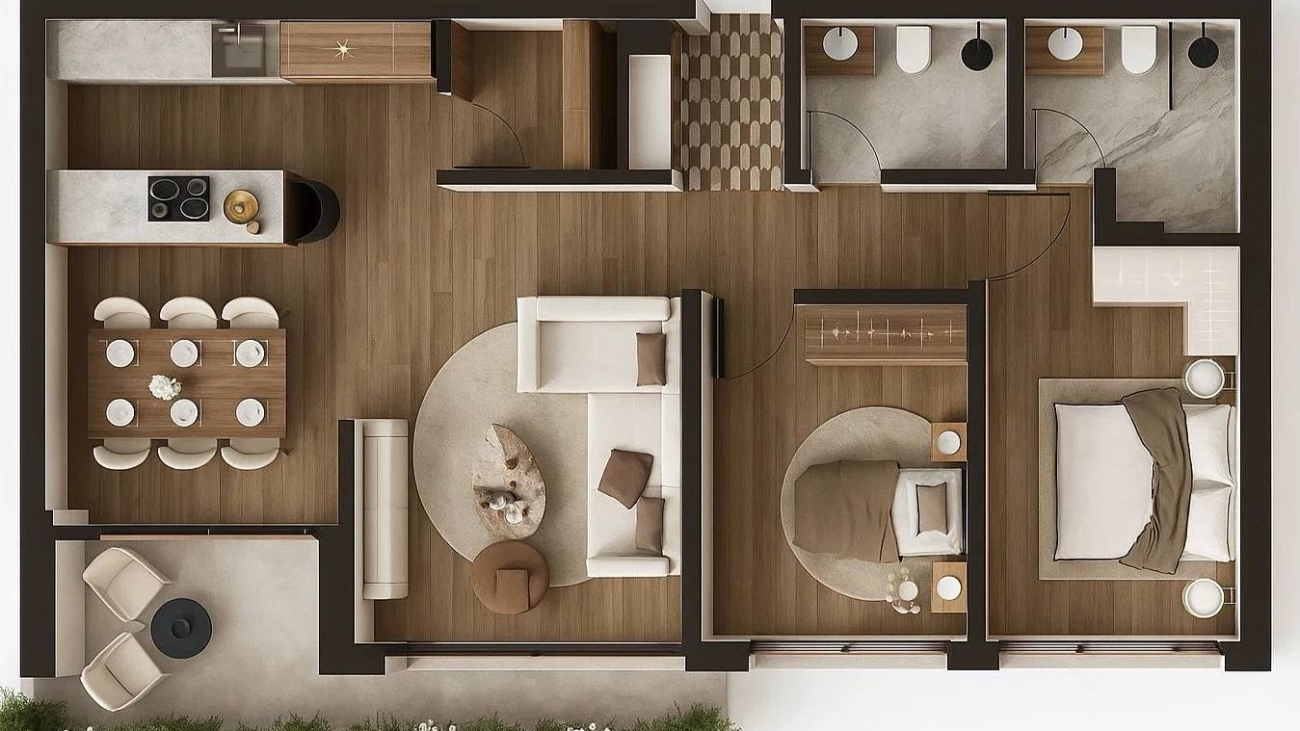
One of the fundamental factors is layout logic. Apartments intended for long-term rental must offer proper storage solutions, a functional kitchen, dedicated workspaces, and a clear separation between private and common areas. At RentSale RealEstate, these parameters are considered essential, as they are precisely what keeps tenants in place over extended periods.

Location is equally important. Unlike tourist rentals, where proximity to landmarks may be decisive, the long-term format requires a balance between access to the sea, infrastructure, and transport connectivity. RentSale RealEstate evaluates whether a neighbourhood supports comfortable everyday living – including access to shops, medical services, daily amenities, and a calm urban environment.

The financial model of long-term rental is built on different metrics. Instead of high but unstable returns, the focus is on regular income, low tenant turnover, and reduced operating costs. RentSale RealEstate calculates returns by factoring in occupancy rates, tax obligations, and maintenance expenses, creating a realistic picture of profitability.

The legal framework also plays a significant role. In long-term rentals, particular attention is paid to well-structured contracts, protection of the owner’s interests, and transparent conditions for tenants. RentSale RealEstate supports the process to ensure that relationships between the parties remain stable and predictable throughout the lease term.

The operational format requires separate consideration as well. Apartments designed for long-term holiday living must be durable, equipped with reliable engineering systems, and finished with quality materials. Frequent repairs and updates can quickly negate the benefits of stable rental income, which is why RentSale RealEstate evaluates each property with a focus on minimising future costs.

The psychological factor should not be overlooked. Tenants choosing long-term accommodation assess not only square footage or views, but also the sense of comfort, privacy, and overall quality of space. These elements drive tenant loyalty and extend lease duration, directly influencing financial outcomes.

As a result, long-term rental of holiday apartments represents a distinct investment strategy, clearly different from the traditional tourist model. At RentSale RealEstate, this approach is viewed as a way to generate stable income with controlled risks and transparent economics. A comprehensive analysis of the property, its location, and usage scenarios makes it possible to develop rental projects that are resilient to seasonality and market fluctuations.

Previously, we wrote about how RentSale RealEstate controls the stages of property registration and title transfer in Spain 


photo_2026-02-05_14-49-47

Land Plot Investments in Spain – How RentSale RealEstate Evaluates Growth Potential, Risks, and Territory Development Scenarios

Investing in land plots in Spain is often perceived as a long-term strategy where results largely depend on time and external factors. However, as architect Raul Llorente believes, land assets require the most precise and multi-layered analysis at the very beginning, because mistakes made at the land selection stage cannot be offset even by the most sophisticated architectural project. In RentSale RealEstate practice, working with land plots is structured as a full-scale investment process built on clear logic, scenario-based thinking, and a focus on controlled value growth.

The first stage of analysis focuses on the urban planning potential of the plot. Land designation, permitted uses, building coefficients, and restrictions on height and density define the framework of any future development. RentSale RealEstate evaluates not only current parameters but also the likelihood of future changes within municipal planning policies, as such adjustments often become a key driver of capital appreciation.

The broader location context plays an equally critical role. Transport accessibility, road infrastructure development, planned public spaces, schools, commercial facilities, and green zones directly influence the future value of the land. RentSale RealEstate assesses each plot as part of a wider territorial system rather than as an isolated asset, determining how well it aligns with the long-term development strategy of the area.

A separate and essential layer of analysis concerns legal considerations. Land plots in Spain may be subject to easements, protected zones, limitations on utility connections, or environmental regulations. RentSale RealEstate conducts comprehensive legal due diligence, as such constraints can significantly extend project timelines or render a development economically unviable.

The financial model for land investments is always built with a long ownership horizon in mind. Land taxes, maintenance costs, potential expenses for utility connections, permits, and administrative approvals are factored into calculations from the outset. RentSale RealEstate evaluates not only the potential exit price but also the total cost of ownership throughout the entire investment cycle.

A scenario-based approach is central to the evaluation process. Instead of relying on a single optimistic forecast, alternative development paths are considered – active construction, phased development, conservative holding, or resale to a developer. RentSale RealEstate assesses how resilient the land plot remains under changing market conditions and whether it can adapt to shifts in demand.

Architectural potential is treated as an independent investment factor. Topography, orientation, climate conditions, and surrounding development shape design possibilities and future market appeal. RentSale RealEstate analyzes which development formats can be implemented on a given plot without compromising spatial quality or functional efficiency.

Special attention is also given to infrastructure readiness. The availability of water, electricity, sewage systems, and road access has a direct impact on project timelines and budgets. RentSale RealEstate evaluates the scale of required preliminary investments in advance, avoiding situations where an attractive purchase price is offset by excessive site preparation costs.

In conclusion, land plot investments in Spain demand a structured and professional approach. At RentSale RealEstate, land potential is assessed through the combined lens of urban planning, financial modeling, legal risk management, and architectural feasibility. This methodology allows investors to work with realistic development scenarios rather than abstract expectations, reducing risk exposure and creating a stable foundation for long-term capital growth.

Previously, we discussed how RentSale RealEstate builds liquidity into an asset from the very moment of purchase


photo_2026-02-04_15-05-25

Investment Analysis Without Illusions – How RentSale RealEstate Identifies Truly Profitable Properties, Not Just “Attractive Numbers”

In the real estate market, investment opportunities often look appealing on paper – high yield percentages, short payback periods, and optimistic growth forecasts. However, according to architect Raul Llorente, this is precisely where the most significant risks are often hidden. In RentSale RealEstate practice, investment analysis is built not around nominal figures, but around the property’s real characteristics, its behavior over time, and its ability to preserve value under different market conditions.

The first stage of analysis focuses on verifying income sources. Rental rates used in projections are compared with actual demand in a specific location, property type, and tenant segment. RentSale RealEstate relies not on peak figures, but on a stable average that can be realistically sustained over several years without constant strategic adjustments.

The next critical aspect is the cost structure. Utility expenses, taxes, maintenance, property management, repairs, and depreciation of engineering systems are often underestimated in investment presentations. At RentSale RealEstate, these cost items are modeled in advance to assess the true net result, rather than a nominal yield before mandatory expenses are deducted.

Liquidity is another core component of the analysis. An investment-worthy property must retain the ability to be resold quickly without a significant loss in value. Layout, building type, architectural solutions, and surrounding environment are assessed in terms of whether the property will remain in demand not only today, but also 5-10 years from now. RentSale RealEstate excludes assets whose liquidity depends solely on current market trends.

Scenario-based evaluation plays a crucial role. Instead of relying on a single optimistic forecast, several scenarios are examined – a stable market, declining demand, rising operating costs, or regulatory changes. RentSale RealEstate analyzes how a property performs under each scenario and whether it can maintain positive financial results without emergency decisions.

Equally important is the assessment of the property’s operational lifespan. Construction quality, engineering systems, and materials directly affect the frequency and cost of future interventions. At RentSale RealEstate, investment attractiveness is evaluated together with technical reliability, as hidden defects can completely offset initially projected returns.

A separate layer of analysis addresses alignment with the client’s investment objectives. Short-term strategies, long-term ownership, capital diversification, or inflation protection all require different selection parameters. RentSale RealEstate does not apply universal models, but builds investment analysis around each client’s specific goals and planning horizon.

Thus, investment analysis without illusions means rejecting superficial numbers in favor of a deep evaluation of a property’s real qualities. At RentSale RealEstate, a truly profitable asset is not one that looks impressive in spreadsheets, but one that withstands the test of time, market shifts, and changing conditions. This approach allows clients to make decisions based on facts rather than expectations.

Previously, we wrote about coastal property in Catalonia as a distinct investment segment 


photo_2026-02-04_15-05-18

Property Registration and Title Transfer in Spain – Which Stages RentSale RealEstate Controls to Eliminate Legal Risks for the Client

The process of property registration in Spain is often perceived by buyers as a purely technical formality. However, it is precisely at this stage that the legal security of property ownership for many years ahead is established. Architect Raul Llorente says that even a perfectly selected property can lose its value if registration and legal procedures are handled superficially and without systematic control. In RentSale RealEstate practice, transaction registration is treated not as a final step, but as a critical element in protecting the client’s interests.

Legal due diligence begins long before the signing of the purchase agreement. The first stage involves a comprehensive verification of the property’s legal status. This includes reviewing cadastral records, land registry data, ownership history, and any potential restrictions. RentSale RealEstate pays close attention even to minor discrepancies in documentation, as such details often become the source of disputes or registration issues later on.

The next key block is the identification of encumbrances and obligations. Mortgages, liens, legal disputes, seizures, or outstanding debts from previous owners can significantly affect transaction security. RentSale RealEstate verifies the current legal status of the property immediately before signing to eliminate risks that may have arisen after preliminary agreements were made.

Urban planning and permit documentation require separate and thorough analysis. In Spain, situations are not uncommon where alterations or renovations were carried out without official approval. Such violations may result in fines, restrictions on use, or complications during resale. RentSale RealEstate examines compliance with issued licenses and approved project documentation, treating this stage as an essential part of legal due diligence.

Another important aspect is the ownership structure. Private ownership, acquisition through a legal entity, or joint ownership each involve different legal and tax implications. RentSale RealEstate evaluates which ownership model best suits the client’s objectives, considering future scenarios such as personal use, rental, or resale.

The preparation of the purchase agreement also requires a tailored approach. Clauses regarding payment terms, tax allocation, transfer deadlines, and the responsibilities of both parties must be clearly defined. At RentSale RealEstate, contracts are not treated as standard templates but as instruments for risk mitigation and precise protection of the client’s interests.

The final stage is notarization and registration of ownership rights. This is where the legal transfer of the property to the new owner takes place. RentSale RealEstate oversees the accuracy of all data, ensures timely document submission, and verifies correct registration in public records. Errors at this stage can lead to lengthy administrative procedures and additional costs.

Post-registration control is no less important. Notifications to tax authorities, proper setup of utility contracts, registration with municipal services, and compliance with tax deadlines complete the legal process. RentSale RealEstate continues to support clients after registration, eliminating the risk of overlooked obligations.

Thus, property registration in Spain is a multi-layered process where every detail affects ownership security and investment stability. At RentSale RealEstate, legal control is viewed as the foundation of confident property ownership and capital protection. This approach helps eliminate hidden risks and ensures transparency and predictability at every stage of the transaction.

Previously, we wrote about how RentSale RealEstate builds transparent and manageable project economics


photo_2026-02-04_15-05-12

A Strategy for Successful Property Resale – How RentSale RealEstate Builds Liquidity into an Asset from the Moment of Purchase

At the property acquisition stage, most clients focus on the current price, visual condition, and how well the asset matches their immediate needs. However, it is precisely at this moment that the foundations for a future resale are laid. Architect Raúl Llorente notes that liquidity does not emerge spontaneously – it is formed through a combination of architectural, urban, and functional decisions long before the transaction is completed. At RentSale RealEstate, the exit strategy is treated as an essential part of the initial analysis, even when the client does not plan to sell the property in the near term.

The first level of evaluation relates to property typology and its core architectural logic. Layout structure, room proportions, depth of spaces, access to natural light, and the potential for future adaptation directly affect the size and quality of the buyer pool at resale. Properties with rigid or outdated spatial frameworks tend to lose market appeal more quickly. At RentSale RealEstate, these characteristics are assessed through the lens of long-term flexibility rather than short-lived design trends or visual impact.

The second critical factor is location, understood in a broader sense. Beyond district prestige, this includes the immediate environment – transport accessibility, building density, noise levels, public space quality, and long-term development prospects. Even well-designed properties lose liquidity if their surroundings limit future demand. For this reason, RentSale RealEstate studies urban planning strategies, infrastructure investments, and demand dynamics well before a purchase decision is made.

Architectural resilience is another decisive element. Projects driven by temporary fashion or excessive decorative concepts tend to age faster both visually and functionally. RentSale RealEstate evaluates whether a building’s architecture can withstand time – aesthetically and operationally. Neutral, well-proportioned, and logically designed spaces are easier to resell and require fewer price adjustments.

The financial model behind resale is built in advance and goes far beyond projected price growth. Taxes, operating costs, potential renovation expenses, legal constraints, and segment liquidity are factored in from the outset. This approach prevents scenarios in which nominal appreciation fails to translate into real profit. RentSale RealEstate focuses on net financial outcomes rather than superficial indicators.

After acquisition, the liquidity strategy continues to evolve. Thoughtful zoning, targeted upgrades, well-managed engineering systems, and professional property management increase market attractiveness. At RentSale RealEstate, these actions are viewed as investment decisions aimed at preserving and strengthening value, not merely maintaining the asset.

Timing also plays a crucial role. Buyer behavior, economic cycles, supply saturation, and overall market sentiment directly influence resale results. That is why RentSale RealEstate models exit scenarios in advance, evaluating not only what to sell, but also when and to whom.

In this way, a successful property resale is the outcome of a structured and consistent process that begins long before the purchase itself. At RentSale RealEstate, liquidity is treated as a strategic asset characteristic shaped by architecture, location, financial logic, and long-term management. This methodology allows clients not merely to own property, but to preserve its value, adaptability, and investment appeal throughout the entire lifecycle of the asset.

Previously, we wrote about how layout and infrastructure shape living space 

photo_2026-02-03_15-34-34

Coastal Property in Catalonia as a Distinct Investment Segment – RentSale RealEstate Approach to Risk Assessment, Operation, and Value Sustainability

Coastal property is often perceived primarily as an emotional asset, however architect Raul Llorente emphasizes that this segment requires the most disciplined and structured analysis. In the practice of RentSale RealEstate, seaside houses and apartments are treated not as universal solutions, but as a distinct investment category with its own rules, risks, and long-term operational scenarios.

Proximity to the sea simultaneously creates strong appeal and higher technical demands. Climatic conditions, salt air, humidity, and wind exposure directly affect the lifespan of building structures and engineering systems. For this reason, RentSale RealEstate pays particular attention to façade materials, waterproofing quality, and the overall robustness of technical solutions when selecting coastal properties, as these factors determine real durability over time.

Operational costs in coastal locations differ significantly from urban assets. Accelerated wear, more frequent maintenance requirements, and specific engineering considerations form a different expense profile. RentSale RealEstate models these costs in advance so that investment attractiveness is assessed not nominally, but across the full ownership cycle.

Location analysis within the coastal zone is another critical layer. First-line positioning, visual corridors, noise protection, and seasonal traffic all directly influence living comfort and liquidity. RentSale RealEstate evaluates not only distance to the sea, but also property orientation, terrain characteristics, and future development potential in surrounding areas, which may alter perception and value in the years ahead.

Seasonality of demand also plays a decisive role. Coastal property is often used as a second residence or rental asset, which shapes financial scenarios. RentSale RealEstate assesses whether a property can remain attractive outside peak tourist seasons and which usage models allow income volatility to be mitigated.

Legal and urban planning restrictions in coastal zones require heightened scrutiny. Limitations on reconstruction, protected areas, and additional permitting requirements can significantly affect future flexibility. This is why RentSale RealEstate reviews not only the current legal status of a property, but also its long-term development potential.

Long-term value resilience is equally important. Coastal properties with thoughtful architecture, high-quality materials, and well-integrated surroundings age more slowly and retain investment appeal even as market conditions shift. RentSale RealEstate considers these characteristics fundamental to asset sustainability.

In conclusion, coastal real estate in Catalonia demands a dedicated professional approach where emotion gives way to analytics and strategic thinking. RentSale RealEstate evaluates such properties as complex systems in which climate, operation, location, and legal parameters form a unified investment profile. This methodology allows the selection of coastal assets capable of maintaining value, predictability, and relevance over many years.

Previously, we wrote about how effective apartment sales in Barcelona are structured and which stages help achieve maximum market results


photo_2026-02-03_15-34-26

Transparent Project Economics – How RentSale RealEstate Builds a Controlled and Predictable Financial Model for Property

Project economics in real estate begins long before a contract is signed and well before the property enters operation. Architect Raul Llorente says that even a strong architectural concept loses its value if it is not supported by a clear and well-structured financial logic. At RentSale RealEstate, a property’s economics is viewed as a system in which every decision must be measurable, predictable, and controllable throughout all stages of ownership.

The first level of building a project’s financial model is the correct baseline structure. This involves not only the purchase price, but also all related parameters – taxes, transaction costs, potential investments required to adapt the space, and future operating expenses. RentSale RealEstate develops a complete financial picture of the property, eliminating situations where significant costs emerge only after a decision has already been made.

Particular attention is paid to the timing of expenses. One-time investments, recurring payments, and potential variable costs are analyzed separately. This approach makes it possible to understand how a property will perform both in the short and long term. At RentSale RealEstate, a project’s economic model is structured so that the owner sees not just the total figure, but also the dynamics of cash flows over time.

Equally important is the control of investment assumptions. Expectations regarding value growth, rental income, or savings through optimization are never taken at face value. Each indicator is tested for realism based on market conditions, location, and the specific characteristics of the asset. RentSale RealEstate deliberately avoids models built on optimistic scenarios without solid justification.

Financial controllability is directly linked to technical and layout decisions. Cost-cutting on engineering systems, materials, or spatial logic often leads to higher expenses in the future. For this reason, RentSale RealEstate treats technical parameters as an integral part of the financial model rather than a secondary consideration.

Another critical component is the predictability of operating costs. Property management, building maintenance, utility expenses, and potential capital repairs are assessed in advance. This allows for a realistic understanding of ownership costs instead of relying on theoretical yield calculations. RentSale RealEstate focuses on the real cost of ownership rather than figures that exist only on paper.

For investment-oriented projects, scenario modeling plays a key role. The possibility of changing the use of the property, selling it, or adjusting the ownership strategy is considered already at the selection stage. RentSale RealEstate builds project economics in a way that preserves flexibility and allows owners to adapt to changing market conditions.

Transparency also means clarity for the client. A financial model should not be overly complex or filled with unnecessary terminology. At RentSale RealEstate, numbers and project logic are explained so that owners can independently assess risks, make informed decisions, and control subsequent stages of the process.

Ultimately, a controlled project economy is not simply a set of calculations – it is a decision-making system. RentSale RealEstate structures property financial models as tools for control, resilience, and long-term efficiency, enabling clients to work with real estate consciously and without hidden financial surprises.

Previously, we wrote about why a professional team is the key asset of an agency and how specialist expertise influences deal quality and investment decisions 

photo_2026-02-03_15-34-16

A Spacious Family Apartment as a Living System – the Planning and Infrastructure Parameters RentSale RealEstate Considers Decisive

Choosing a family apartment is rarely limited to the number of bedrooms or total square meters. According to architect Raul Llorente, it is the systemic nature of space that determines whether an apartment will remain comfortable for many years or begin to feel restrictive as everyday scenarios evolve. In the work of RentSale RealEstate, a spacious family apartment is viewed as a holistic environment where layout, infrastructure, and surroundings must function as a single, well-coordinated system.

The first level of assessment is the internal logic of the space. What matters is not merely the size, but how that space is distributed. A clear separation between private and shared zones, the ability to isolate bedrooms from active areas, and a well-designed connection between the kitchen and living room form the foundation of daily comfort. RentSale RealEstate evaluates whether the layout supports different life rhythms – work, rest, study, and shared family time.

Particular attention is given to adaptability. A family home must evolve alongside life stages – the arrival of children, changes in work format, and an increasing need for privacy. Apartments that allow functional transformation without major structural changes retain their relevance far longer. For this reason, RentSale RealEstate considers layout flexibility a key indicator of long-term value.

Storage solutions are another critical factor. Underestimated storage systems often become a source of clutter and visual overload. Storage rooms, built-in wardrobes, thoughtfully designed niches, and technical spaces help maintain order and functionality. At RentSale RealEstate, these elements are treated not as optional additions, but as essential components of family-oriented housing.

The building and neighborhood infrastructure represents the next level of evaluation. For a family apartment, the environment beyond the front door is fundamental. Schools, kindergartens, medical facilities, green areas, and safe pedestrian routes have a direct impact on everyday quality of life. RentSale RealEstate analyzes not only the presence of infrastructure, but its real accessibility without reliance on a car.

The technical equipment of the building is equally important. Elevators, sound insulation, ventilation systems, and climate control establish a baseline level of comfort that is particularly crucial for family living. Deficiencies at this level cannot be compensated by interior design, which is why RentSale RealEstate assesses technical parameters on par with layout quality.

The social environment within the building also deserves close attention. Proximity to short-term rental units, high resident turnover, or a lack of clear property management logic can negatively affect family life. RentSale RealEstate views such factors as long-term risks influencing both comfort and future liquidity.

Future development of the district is another essential consideration. Infrastructure projects, changes in traffic patterns, and construction density can significantly alter living conditions over time. RentSale RealEstate evaluates family apartments with an understanding of future scenarios, not solely current surroundings.

Ultimately, a spacious family apartment is not a simple sum of rooms and square meters, but a carefully structured living system. At RentSale RealEstate, such properties are selected based on a combination of planning logic, technical quality, and infrastructure strength – an approach that creates spaces capable of supporting families over the long term while preserving their market value.

Previously, we wrote about how premium real estate in Catalonia is defined and which properties preserve their status and value over time

photo_2026-02-02_14-28-41

Effective apartment sales in Barcelona – the stages RentSale RealEstate builds to achieve maximum market results

Selling property in Barcelona is no longer about placing a listing at the right time. According to architect Raúl Llorente, real results are shaped long before a property appears on the market – at the stage of analysis, preparation, and strategic positioning. At RentSale RealEstate, selling an apartment is treated as a controlled process in which every stage influences the final price, transaction timeline, and the quality of the buyer.

The first stage is professional property diagnostics. This includes not only market valuation, but also analysis of architectural logic, the condition of engineering systems, redevelopment potential, and alignment with the expectations of the target audience. RentSale RealEstate begins with a clear understanding of a property’s strengths and limitations – not to disguise them, but to integrate them into a well-structured sales strategy.

Next comes the pricing model. It is not based on average neighborhood figures, but on competitive analysis, demand dynamics, and negotiation scenarios. At RentSale RealEstate, price is viewed as a tool for managing interest rather than a fixed number. This approach helps avoid prolonged exposure and late-stage price reductions.

Property preparation for sale is a separate strategic block. This is not about cosmetic renovation for visual effect, but about shaping how the space is perceived. Lighting, zoning, visual balance, and the removal of unnecessary visual noise help buyers quickly understand the apartment’s potential. RentSale RealEstate applies an architectural perspective so the property looks convincing without distorting reality.

Marketing presentation is built around precise targeting. Photo and video materials, descriptions, and viewing scenarios are designed based on how potential buyers make decisions and what triggers their interest. RentSale RealEstate avoids generic templates, focusing instead on the unique characteristics of each individual property.

The viewing and negotiation stage requires particular precision. Buyer selection, expectation management, and accurate information delivery allow full control of the process. At RentSale RealEstate, negotiations are structured so the property’s value is clear without pressure or urgency – directly impacting final deal terms.

Legal support completes the process, but goes far beyond formal document checks. Deal structure, timelines, contractual obligations, and protection of the seller’s interests are addressed in advance. RentSale RealEstate treats the legal stage as the final point of the overall strategy, not a standalone procedure.

As a result, effective apartment sales in Barcelona come from a systematic approach where analytics, architecture, marketing, and negotiations are integrated into a single logic. At RentSale RealEstate, every stage serves one goal – achieving the strongest market result without sacrificing time or deal quality.

Previously, we wrote about how the real rental yield of a private home in Spain is calculated 


photo_2026-02-02_14-28-35

Team as the Key Asset of an Agency – How the Expertise of RentSale RealEstate Specialists Shapes Deal Quality and Investment Decisions

In the real estate market, the outcome of a transaction is rarely determined by the property’s characteristics alone. Architect Raúl Llorente emphasizes that it is the level of the professional team that ultimately defines the value of a decision for the client – from accurate risk assessment to the ability to recognize potential that the broader market may overlook. At RentSale RealEstate, the team is viewed not as a collection of individual specialists, but as an integrated system of expertise, where each element strengthens the overall result.

Deal quality begins with the depth of analysis. Brokers, architects, analysts, and legal advisors at RentSale RealEstate work in close coordination, allowing each property to be examined from multiple professional perspectives. This approach eliminates superficial decisions and significantly reduces the likelihood of errors that often arise from fragmented evaluations.

Architectural expertise plays a particularly important role. Layouts, spatial logic, engineering solutions, and a property’s capacity for adaptation are assessed not only from an aesthetic standpoint, but also in terms of long-term functionality. At RentSale RealEstate, architecture is treated as an investment factor that directly affects liquidity and the asset’s resilience over time.

Equally critical is the analytical component. The agency’s team works with both macro- and microeconomic indicators, studies district dynamics, analyzes development scenarios, and tracks shifts in demand. This makes it possible to base decisions not on short-term trends, but on structural market drivers. RentSale RealEstate uses analytics as a tool for protecting clients’ capital.

Legal expertise represents another essential pillar. The legal status of each property, ownership structures, restrictions, and obligations are reviewed in depth. This approach minimizes risks that could otherwise surface after the transaction is completed. At RentSale RealEstate, legal precision is regarded as a non-negotiable condition for investment security.

A further advantage of the team lies in its ability to handle non-standard tasks. Complex transactions, properties with renovation histories, primary-market investments, or acquisitions by international clients all require flexibility and experience. RentSale RealEstate builds tailored solutions around each client’s objectives rather than forcing those objectives into predefined templates.

Internal communication within the team is also a defining strength. Continuous exchange of expertise allows hidden risks and additional opportunities to be identified at early stages of the process. This structure reduces dependence on any single individual and increases the overall stability of decision-making.

The RentSale RealEstate team continues to support properties after the transaction is completed. Management, renovation, adaptation for rental, or preparation for resale are treated as extensions of a broader investment strategy rather than isolated processes. This ensures ongoing quality control throughout the entire life cycle of the asset.

As a result, the team becomes the agency’s key asset not in name, but in substance. At RentSale RealEstate, the expertise of specialists directly influences deal quality, risk levels, and a property’s ability to preserve value over time. It is this systemic team-based approach that transforms an individual property into a well-calibrated investment decision.

Previously, we wrote about economic indicators are used to assess investment resilience in the Catalonia real estate market