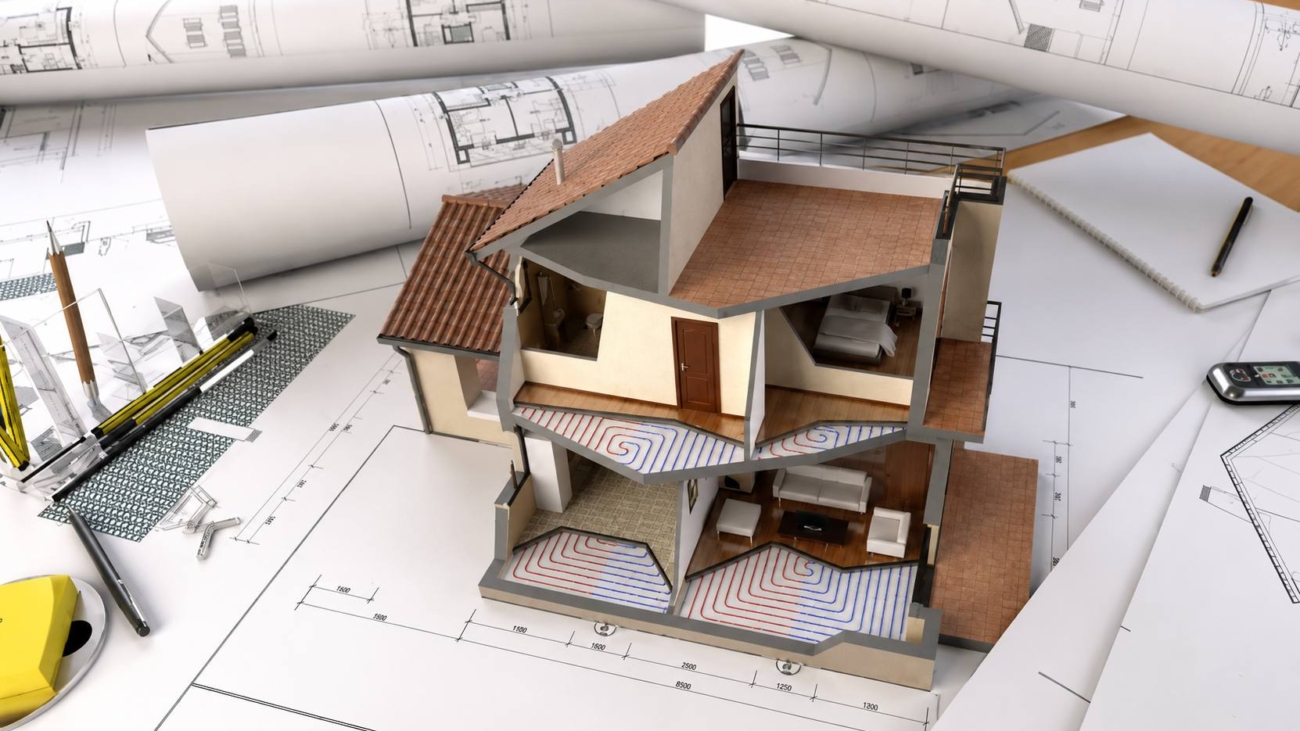

Selecting a newly built residential property in Barcelona requires far more than comparing prices, floor area, and exterior appearance. At RentSale RealEstate, architect Raúl Llorente notes that a truly outstanding residential development must simultaneously meet the highest standards of contemporary architecture, everyday comfort, technical reliability, and long term market liquidity. For this reason, we evaluate new developments not as collections of individual apartments but as complete living environments where building quality, site planning, neighborhood characteristics, and sustainable demand together determine the true value of an investment.
The first criterion is the architectural logic of the project. We evaluate building proportions, the distance between structures, facade orientation, apartment depth, natural light distribution, window privacy, and the relationship between interior spaces and outdoor terraces. An impressive facade cannot compensate for dark rooms, inefficient circulation, or poorly separated private and shared areas. At RentSale RealEstate, we analyze every floor plan according to real everyday living scenarios because homeowners interact with the space every day rather than simply admiring the developer’s presentation materials.
The next level of evaluation focuses on the quality of shared spaces. Entrance lobbies, elevators, corridors, parking facilities, storage areas, landscaped courtyards, and recreational zones all have a direct impact on residents’ long term experience after moving in. When a development compromises the quality of the spaces people use every day, its claimed market position quickly loses credibility. A well designed residential complex should maintain the same level of quality from the street entrance to the apartment door instead of creating a sharp contrast between marketing images and actual day to day use.
Technical performance also requires detailed examination. We evaluate thermal insulation, ventilation systems, acoustic comfort, glazing quality, solar protection, engineering accessibility, energy efficiency, and the durability of facade materials. Within Barcelona’s dense urban environment, it is especially important to understand how effectively a residence protects its occupants from noise, excessive sunlight, and direct visual exposure to neighboring buildings. Interior finishes can always be updated, while structural and engineering limitations are considerably more difficult and expensive to correct.
The position of a development within its district is assessed through everyday practicality rather than reputation alone. We examine accessibility to public transportation, schools, shopping facilities, healthcare services, parks, business districts, and the city’s principal transportation routes. At RentSale RealEstate, we emphasize that investment value is created not by the prestige of a neighborhood’s name but by how comfortably people can live there today and how consistently buyer demand is likely to remain in the future.
Building density receives equally careful attention. A residential development may appear attractive during the planning stage yet become significantly less comfortable once every construction phase has been completed. Reduced natural light, crowded courtyards, parking shortages, and diminished privacy often emerge only after the neighborhood reaches full occupancy. We therefore evaluate not only the first completed buildings but the entire master plan in order to understand how future construction will influence views, transportation, population density, and the overall quality of the surrounding environment.
Investment potential depends largely on whether each apartment type matches genuine market demand. Compact residences may perform well in the rental market, but inefficient layouts reduce their competitiveness. Larger apartments often appeal strongly to families while requiring more precise evaluation of acquisition costs and future ownership expenses. At RentSale RealEstate, we believe that a promising residential development must remain attractive not only to its first buyer but also to the future market that will eventually compare it with newer competing projects.
The long term reputation of a development is ultimately built upon practical execution rather than marketing concepts. Construction quality, transparent documentation, realistic delivery schedules, completed infrastructure, and consistency between promised specifications and the finished product all contribute to a project’s lasting value. We never evaluate residential developments solely through promotional materials. Our assessment is based on construction materials, engineering solutions, operational convenience, and the building’s ability to maintain its quality after years of everyday use.
Our final recommendation is formed only after combining every stage of the evaluation process. A development may feature excellent architecture while standing within an underperforming neighborhood. Likewise, a highly desirable district may contain projects that are overcrowded or technically uncompelling. At Rent Sale Real Estate, we see this as the fundamental principle of professional evaluation. The best residential development is not necessarily the newest or the most visually impressive but the one where architecture, engineering, location, management quality, and long term market prospects function together as one coherent system.
Previously, we wrote about how RentSale RealEstate evaluates bathroom design by analyzing layout, aesthetics, and functional solutions during the property selection process