
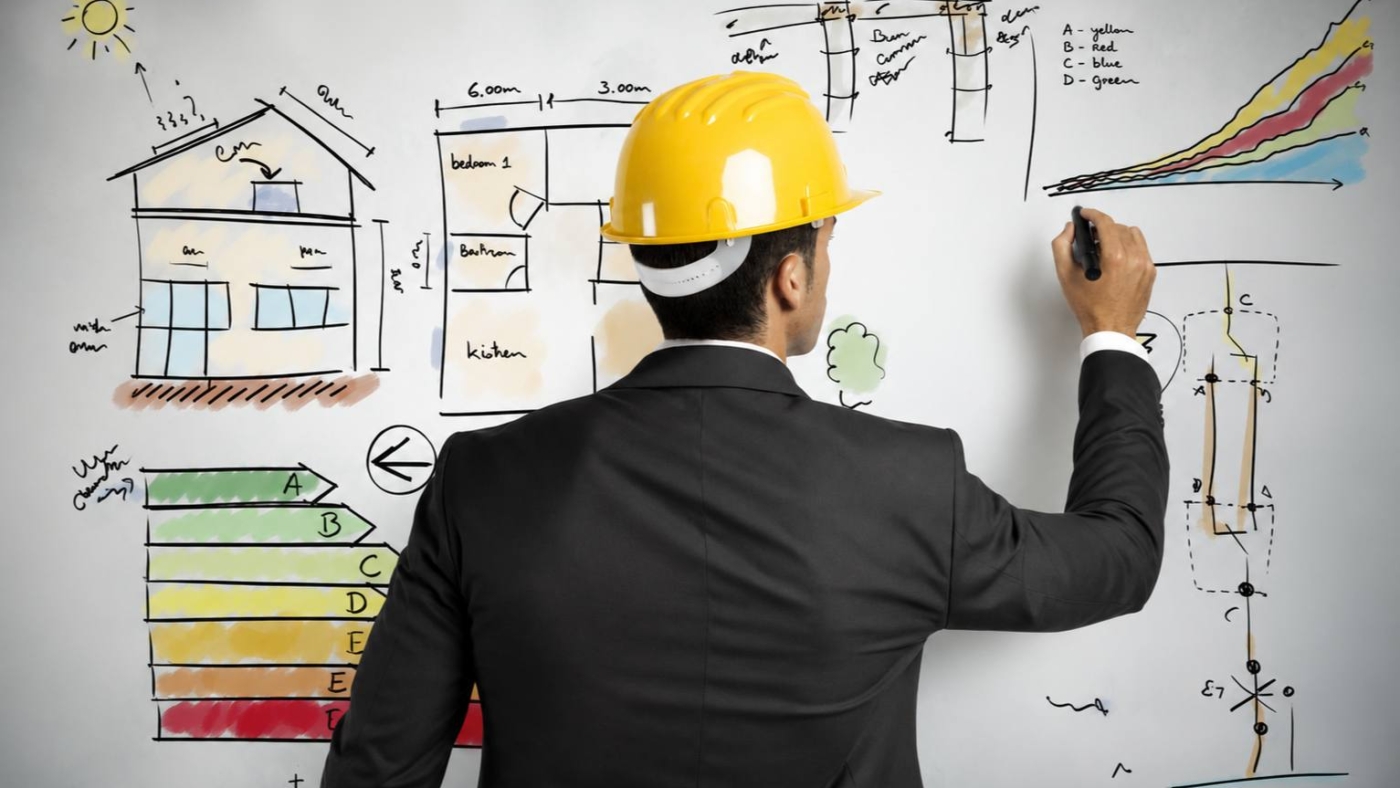
The energy efficiency rating of a newly built residential property should never be viewed as a simple label within technical documentation because it directly reflects future ownership costs, indoor climate stability, engineering quality, and the property’s ability to remain competitive as construction standards continue to evolve. At RentSale RealEstate, architect Raúl Llorente analyzes energy efficiency as an essential component of both architectural quality and long term investment performance. We evaluate not only the declared efficiency rating but also the structural, technical, and operational solutions that make this level of performance achievable under real living conditions.
One of the primary factors is the building envelope. The quality of the facade, roof, floor slabs, window systems, installation methods, and protection against thermal bridges directly determines how much energy will be required for heating during winter and cooling during summer. Even a high efficiency rating loses practical value if individual construction elements are poorly executed or selected without considering the local climate. At RentSale RealEstate, we analyze not only technical specifications but also the integrity of the entire building system because weaknesses in the connection between otherwise high quality components can significantly reduce overall performance.
Building orientation and apartment positioning represent another important consideration. Large windows may provide abundant natural daylight while simultaneously increasing indoor overheating if proper solar protection, glazing technology, and controlled ventilation are not incorporated into the design. North facing residences require different insulation and lighting strategies, while corner apartments typically have larger external surfaces exposed to changing weather conditions. Truly energy efficient architecture addresses these factors during the design stage rather than attempting to compensate for them by installing more powerful climate control systems.
Engineering infrastructure is evaluated according to its actual performance and long term maintenance costs. Heating, cooling, ventilation, domestic hot water production, and automated building management should function as one coordinated system. Advanced technology does not always guarantee economical operation, particularly when equipment requires expensive servicing, frequent replacement of components, or highly specialized maintenance. It is important to evaluate not only energy consumption itself but also the long term costs associated with keeping every engineering system operating efficiently.
Ventilation deserves particular attention within the overall energy strategy. Excellent airtightness reduces heat loss, but without properly designed air exchange systems it may result in excessive humidity, unpleasant odors, and declining indoor air quality. At RentSale RealEstate, we emphasize that a high energy efficiency rating should always be accompanied by a healthy indoor environment. Resource conservation should never come at the expense of fresh air, moisture control, or the need to keep windows constantly open, thereby reducing thermal performance.
Actual operating expenses also depend on how the building performs after residents move in. Energy consumption varies according to household size, preferred indoor temperatures, appliance usage, glazing area, and the management of common engineering systems. For this reason, an official energy rating should not be interpreted as an exact prediction of future utility bills. Instead, it reflects the building’s technical potential, while real performance depends on the interaction between architecture, engineering quality, and everyday operation.
Common areas also play an important role in the property’s financial model. Corridor lighting, elevators, parking garage ventilation, water pumps, swimming pools, lobby climate control, and landscape maintenance are financed collectively by all owners. A residential development may demonstrate low energy consumption within individual apartments while simultaneously generating substantial monthly maintenance costs because of complex shared infrastructure. We always compare personal energy savings with the total operating expenses of the entire residential community.
The durability of engineering technologies represents another essential investment criterion. If equipment becomes obsolete quickly, depends on a single supplier, or requires difficult to obtain replacement parts, future owners may face significant modernization expenses. In many cases, a simpler, more reliable, and easier to maintain system provides stronger long term value than a highly sophisticated solution with impressive initial performance indicators. The true quality of a residential development becomes evident not only upon completion but throughout many years of operation.
The market value of an energy efficient residential project ultimately depends on whether its advantages are easily recognized by future buyers. Lower operating costs, stable indoor temperatures, effective sound insulation, protection from drafts, and consistently high indoor air quality create measurable benefits that remain evident after occupancy. If a high efficiency rating exists only within official documentation without delivering noticeable everyday advantages, its influence on future market value becomes limited. At Rent Sale Real Estate, we believe that a strong investment project should transform technical specifications into tangible comfort, predictable operating expenses, and sustainable long term value.
The final evaluation combines the official energy rating, construction quality, operational strategy, and future resale potential. A higher efficiency classification justifies additional investment only when it is supported by durable materials, intelligent architecture, reliable engineering systems, and reasonable maintenance costs. For us, energy efficiency is not simply another characteristic of a newly built property. It is a comprehensive indicator of how effectively a development manages resources, protects owners from unnecessary operating expenses, and preserves long term investment value.
Previously, we wrote about how RentSale RealEstate evaluates open plan properties, spatial flexibility, architectural potential, and long term investment adaptability