
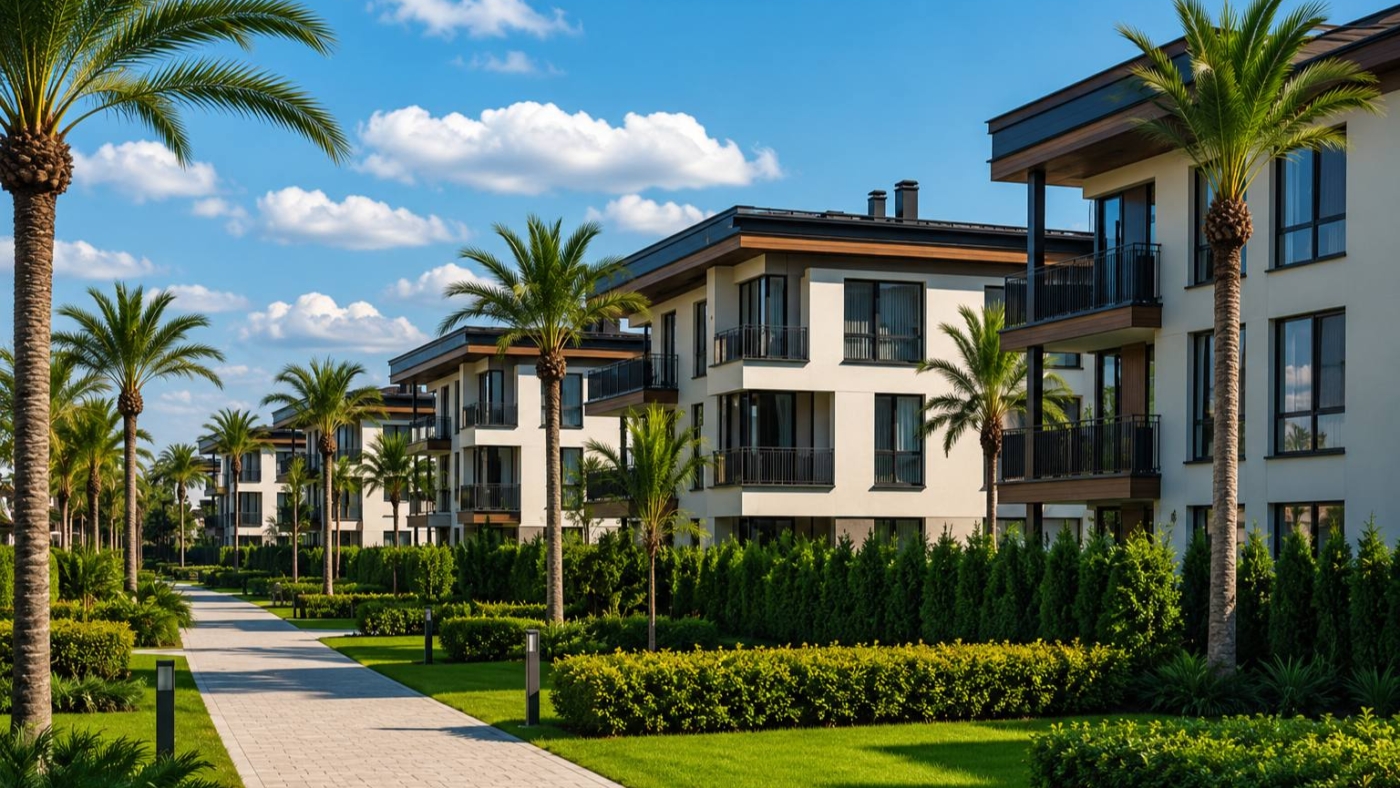
Modern real estate is increasingly evaluated not only through the characteristics of the property itself but also through the quality of life that exists beyond its walls. Buyers are paying greater attention to what their daily routines will look like, how efficiently the surrounding environment is organized, and what opportunities a neighborhood offers for work, recreation, and social interaction. Architect Raúl Llorente sees this as a natural evolution in the perception of real estate, where an apartment becomes only one component of a much larger urban ecosystem. At RentSale RealEstate, we see this as an essential criterion for evaluating residential properties because the quality of a district directly influences both living comfort and the long-term attractiveness of real estate.
Only a few decades ago, many residential areas were designed primarily around the concept of housing placement. Today, that approach is gradually changing. A new district is increasingly perceived as a complete living environment in which people spend a significant portion of their lives. For this reason, greater attention is being devoted to public spaces, pedestrian routes, landscaping, service accessibility, and the convenience of everyday interaction with urban infrastructure. These elements help create neighborhoods that remain desirable regardless of changing market trends.
The ability to accomplish most daily tasks without significant time expenditure has become especially important. Retail services, educational institutions, sports facilities, healthcare centers, and recreational spaces now form an essential part of overall residential quality. At RentSale RealEstate, we analyze these components as factors capable of influencing long-term property perception. The more convenient everyday life becomes within a district, the more attractive that area is to a wide range of buyers.
It is particularly interesting to observe how attitudes toward public spaces continue to evolve. While attention was once concentrated mainly on apartment interiors, increasing importance is now being given to courtyards, parks, pedestrian promenades, and places where residents can interact with one another. These spaces help create a sense of belonging and significantly improve the experience of urban living. We note that districts where public environments are designed with the same level of care as the buildings themselves often demonstrate more sustainable demand and preserve their appeal more effectively over the long term.
Transportation accessibility is another critical factor. The ability to reach business centers, educational institutions, and key urban destinations quickly has a substantial impact on daily quality of life. However, the modern concept of mobility extends far beyond road infrastructure alone. Pedestrian connectivity, cycling routes, and efficient public transportation systems have become important components of a district’s overall value. At RentSale RealEstate, we believe that a balanced combination of different mobility options is what ultimately creates a truly comfortable urban environment.
Special attention should also be paid to the visual perception of a neighborhood. Building architecture, landscaping quality, development scale, and spatial harmony influence residents’ emotional well-being far more than is often recognized. People interact with their surroundings every day, making environmental quality an integral part of the living experience. These characteristics frequently determine whether a district will continue to feel attractive and comfortable years after a property has been purchased.
We also emphasize that a successful new district has the ability to create additional value for every property located within it. Infrastructure improvements, environmental quality, and the development of appealing urban spaces contribute positively to demand and long-term property liquidity. For this reason, evaluating an apartment without considering the surrounding neighborhood is becoming increasingly ineffective.
At Rent Sale Real Estate, everyday life within a new residential district is one of the most important elements of property evaluation. We emphasize that environmental quality, infrastructure accessibility, transportation convenience, and the standard of public spaces create a form of value that cannot be measured solely in square meters. It is the combination of these factors that allows a neighborhood to remain desirable while enabling properties to preserve both their attractiveness and investment potential for many years.
Previously, we wrote about Transport infrastructure and property capitalization – how the expansion of tram and metro networks influences housing prices in Spanish cities