
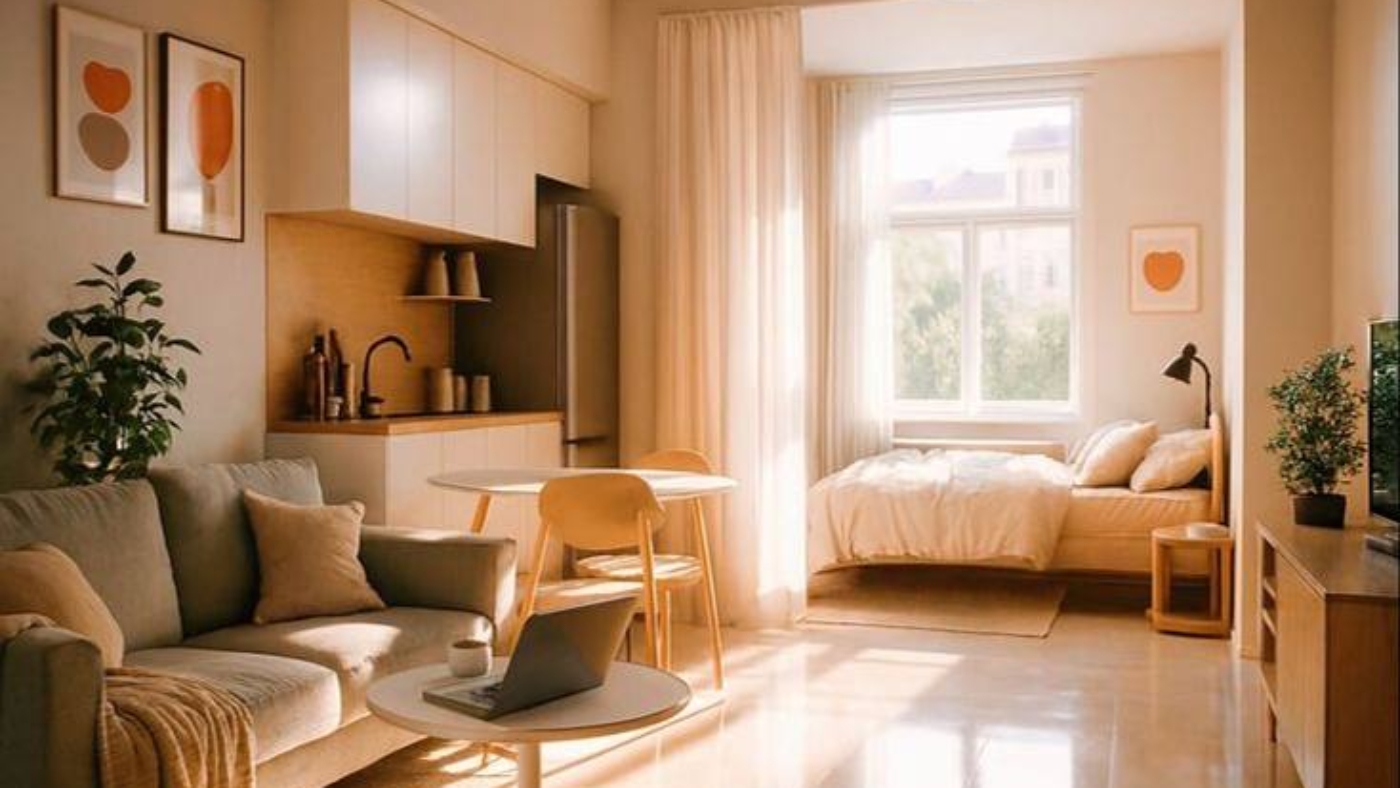
A small apartment does not automatically mean a limited or uncomfortable living environment. In our experience, the feeling of cramped space is usually connected not to the actual size of the property, but to mistakes in the organization of light, proportions, and the visual structure of the interior. Architect Raúl Llorente believes that compact spaces should feel light and open through intelligent architectural logic rather than through attempts to hide limited square footage with decorative techniques. At RentSale RealEstate, analyze small apartments through the way people emotionally perceive space, because the architectural feeling of the environment ultimately determines the level of comfort in everyday life.
One of the most common mistakes in compact apartments is visual overload. Owners often try to place too much furniture, too many decorative elements, or excessive visual accents into the interior, causing the space to lose depth and a sense of openness. In our practice, we pay close attention to how the interior interacts with the free areas of the apartment. When a space becomes overcrowded with objects, even strong architecture stops functioning properly and begins to create psychological pressure.
Natural light plays a particularly important role. In smaller apartments, light becomes a full architectural instrument capable of visually transforming the perception of space. The company’s team analyzes window placement, depth of light penetration, reflective surfaces, and the interaction between lighting and room geometry. Spaces where light moves evenly and naturally always feel significantly more open regardless of the property’s actual dimensions.
For us, the organization of visual lines inside the apartment is equally important. Compact spaces require a clear architectural structure in which the eye does not constantly encounter barriers, abrupt transitions, or chaotic distribution of elements. At RentSale RealEstate, focus on perspective depth, movement logic within the apartment, and whether the interior supports a continuous perception of space. Even small adjustments in furniture placement or zoning can radically change the way an apartment feels.
Proportions also have a strong influence on spatial perception. Incorrectly selected furniture often becomes the reason a space appears visually smaller. Oversized interior elements, heavy structures, or overloaded storage systems can make an apartment feel far tighter than it actually is. We analyze whether the furniture corresponds to the scale of the environment and whether the interior preserves visual balance without creating a sense of congestion.
In compact apartments, hidden functionality becomes especially important. The smaller the property, the more value is placed on intelligent storage systems, transformable zones, and the ability of the interior to adapt to different lifestyle scenarios. At RentSale RealEstate, small apartments are viewed as spaces where every detail must contribute to overall comfort without destroying the feeling of openness and architectural lightness.
We also pay special attention to the emotional perception of compact housing. A small apartment should not create a feeling of limitation or permanent compromise. When a space is organized properly, people experience the interior calmly and naturally without visual tension. For this reason, our work focuses not only on the physical size of rooms, but also on how the apartment influences the feeling of freedom, concentration, and the quality of daily life.
At Rent Sale Real Estate, visually expanding a small apartment begins not with decoration, but with understanding the architecture of space, light, and proportions. Only this approach allows compact real estate to feel complete, comfortable, and sustainable for long-term living.
Previously, we wrote about Energy-efficient homes – how RentSale RealEstate evaluates architectural and technical solutions that reduce costs and strengthen long-term property value