
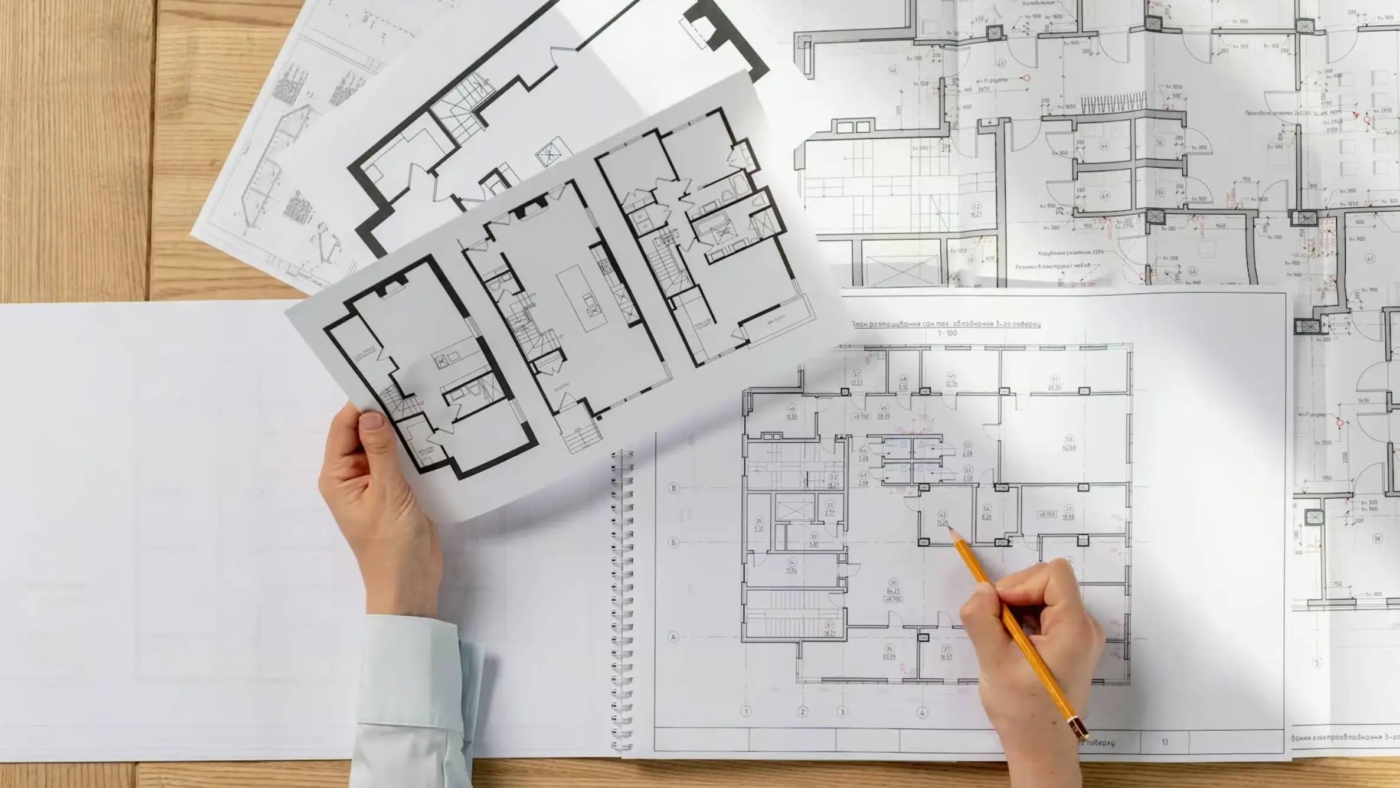
The figure shown in a listing often looks like the strongest argument, yet this is exactly where most purchasing mistakes begin. Architect Raúl Llorente says that square meters do not equal comfort when the space is assembled poorly. That is why at RentSale RealEstate we assess not the number stated in documents, but the real usability of the layout – how an apartment performs in everyday life and how well it will hold up over time.
Total area includes every part of the apartment – corridors, bathrooms, storage rooms, technical niches and areas that cannot support a full living scenario. Living area reflects only the rooms where daily life actually happens – where you can rest, work, host and organize storage without constant compromise. In practice, the difference between these two indicators can completely change how a property feels – and how strong its market prospects are.
The most common problem is an excessive share of “transit” square meters. Long corridors, complicated internal routes and pass-through rooms increase total area, but they do not increase value. At RentSale RealEstate we treat such meters as non-functional – they rarely improve quality of living and almost always weaken perception when a property is later brought back to the market.
Next comes proportion. The same living area can deliver very different results depending on room geometry and wall placement. Rooms can be overly narrow, elongated, broken by too many doorways or shaped by awkward angles that limit furnishing options. We evaluate whether the space supports essential scenarios – placing a bed properly, creating a workable desk area, organizing storage and maintaining comfortable circulation without fighting for centimeters.
A key indicator is planning logic. A property feels more valuable not when it has more square meters, but when each meter performs a clear task. Correct zoning, a coherent separation between public and private areas, the absence of spatial bottlenecks and the ability to adapt over time create resilience. This is exactly what RentSale RealEstate considers a sign of high-quality architecture, even when the total area is not the largest in the market.
We also assess daylight and spatial depth. A formally large apartment may still feel tight if it contains dark zones, weak sunlight exposure or poor orientation. Balanced natural light, proper proportions and reasonable room depth enhance both perceived and practical value – and that value directly affects liquidity.
In the long term, the winners are properties where usable space truly dominates rather than being diluted by technical meters. Apartments with a high share of functional zones adapt more easily to lifestyle changes – and are typically resold with less discounting. This is why RentSale RealEstate evaluates area not as a number, but as a structure – because structure ultimately determines whether an apartment is a strong purchase.
Earlier we wrote about Architecture versus fashion – why long-term relevance matters more than temporary trends