
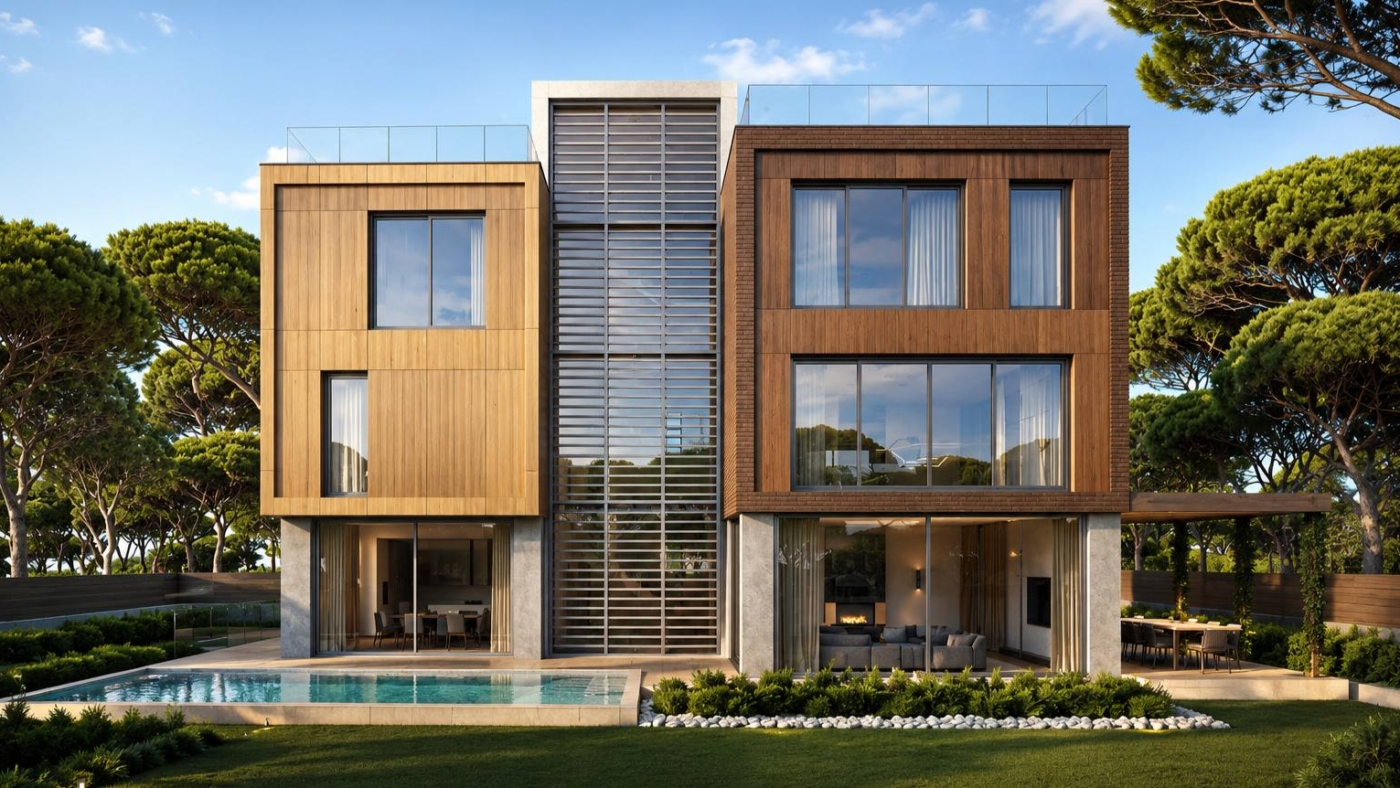
Neuroarchitecture shows that a home influences a person not only through comfort, square footage, or design, but also through the nervous system’s response to light, scale, proportions, noise, movement paths, and the feeling of protection. At RentSale RealEstate, Architect Raúl Llorente sees this as an important tool for evaluating real estate because space can reduce stress levels, support concentration, enhance a sense of calm, or, on the contrary, quietly create tension. Buyers cannot always explain why they feel relaxed in one house but want to leave another as quickly as possible, yet there are almost always architectural reasons behind that reaction.
The first factor is spatial clarity. When a person enters a home and quickly understands where the main zones are located – how to move from the entrance to the living room, kitchen, bedrooms, terrace, or workspace – the brain spends less energy on orientation. Complex corridors, dark transitions, illogical door placement, walk-through rooms, and weak zoning create micro-stress even in expensive interiors. At RentSale RealEstate, we analyze layouts not as drawings on paper but as daily cognitive load – the more naturally and clearly a space functions, the higher its quality for long-term living.
Light has a direct influence on emotional state. Insufficient natural light increases the feeling of enclosure, while overheating and excessive direct sunlight can cause fatigue just as much as dark rooms. Window orientation, room depth, ceiling height, opening size, shading systems, and the ability to regulate light throughout the day all matter. Soft daylight in the living room, calming illumination in the bedroom, and the absence of aggressive visual contrast in work areas make a home psychologically more stable. Such properties feel more valuable not only visually but physically – through the body’s perception of comfort.
Room proportions affect perception more than most buyers realize. A room may offer adequate square footage but still feel cramped, overly narrow, or uncomfortable because of poor proportions. Low ceilings may create pressure, excessively open spaces without zoning can trigger vulnerability, and narrow passageways may increase irritation in everyday routines. At RentSale RealEstate, we emphasize that neuroarchitectural evaluation reveals not only how many square meters a property has, but how those meters are experienced during movement, rest, and daily activities.
Acoustics become a separate component of psychological comfort. Constant street noise, audible neighbors, echo in large rooms, vibrations from engineering systems, or sharp sounds from shared areas gradually increase stress levels. A person may appear to adapt to noise, but the nervous system continues to register it as a stressor. High-quality housing requires dense windows, sound-insulated slabs, quiet ventilation, correct bedroom positioning, and materials that soften the internal sound environment. Silence in a home is not a luxury – it is a requirement for recovery.
Materials and textures also influence emotional perception. Cold glossy surfaces, excessive glass, hard stone, and empty walls can create visual sterility and acoustic harshness. Wood, textiles, matte finishes, natural tones, and tactile materials often make a space calmer without excessive decoration. At RentSale RealEstate, we believe premium quality is not defined by the number of visually impressive elements, but by how accurately materials support physiological comfort, durability, and the everyday feeling of warmth.
Privacy is linked not only to safety but also to nervous system regulation. Windows facing neighboring buildings, open terraces without protection, bedrooms near noisy zones, visible entrances, or a lack of private corners reduce the feeling of control over space. A home should allow visibility when desired and separation from the outside world when rest is needed. This is especially important for families, people with intensive work schedules, and buyers who see housing as a place for recovery rather than simply an address.
Movement routes inside the home shape quality of life in subtle ways. If the kitchen is too far from entertainment areas, storage is inconvenient, bathrooms conflict with private zones, the workspace sits in a transitional area, or reaching the terrace requires unnecessary movement, the property creates daily friction. At RentSale RealEstate, we note that repetitive daily routines reveal the true value of architecture – a strong home does not force people to adapt to planning mistakes but instead supports their rhythm naturally and calmly.
Neuroarchitecture makes real estate evaluation more precise because it connects architecture, spatial psychology, and practical daily use. A home with strong proportions, quality light, silence, privacy, clear planning, and well-chosen materials affects not only mood but also sleep quality, productivity, recovery, and the desire to remain in the space longer. At Rent Sale Real Estate, we see this as an important indicator of future liquidity: buyers increasingly choose not just visually attractive properties, but environments that reduce internal tension and improve everyday quality of life.
Previously, we wrote about how RentSale RealEstate evaluates villas in Madrid, including the strategy for selecting premium suburban property, privacy, and long-term value growth potential