
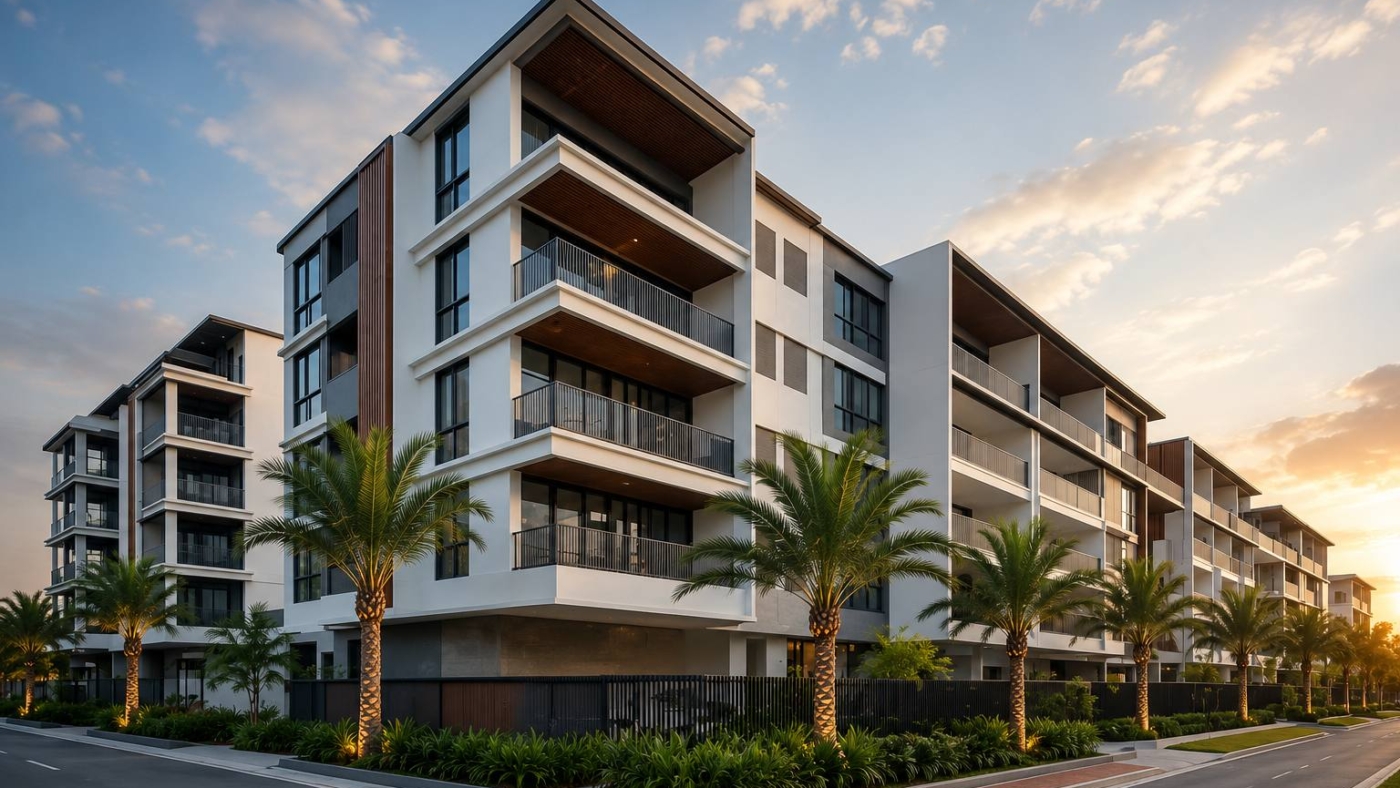
Purchasing an apartment in a new development is often associated with modern living, new engineering systems, and minimal technical maintenance costs for years to come. However, a newly built property does not automatically mean the absence of risk. Behind attractive renderings, polished marketing presentations, and developer promises, there may be underlying factors capable of significantly affecting future liquidity and the true value of the asset. Architect Raúl Llorente analyzes new developments not only through architectural aesthetics or price per square meter, but also through the quality of structural solutions, engineering reliability, and the project’s long-term sustainability. At RentSale RealEstate, we see this as the foundation of professional evaluation, because a strong asset is defined not by marketing presentation, but by the actual quality of execution.
One of the first factors to evaluate is the developer’s reputation. The history of completed projects, adherence to construction deadlines, financial stability, and the quality of previously delivered properties often provide far more insight than promotional materials. A developer creates not just a building, but an investment product with a specific level of reliability. Even a strong location cannot always compensate for weak project execution. This is why developer analysis becomes a fundamental part of pre-purchase due diligence.
The quality of construction itself is equally important. During property viewings, buyers often focus on visible details such as lobby finishes, façade design, or showroom presentation. Yet the real value of a new development lies much deeper. The quality of structural concrete work, sound insulation, engineering systems, ventilation solutions, waterproofing, and energy efficiency directly affects living comfort and future operating costs. At RentSale RealEstate, we analyze these parameters as core indicators of long-term liquidity, since technical deficiencies can reduce an asset’s attractiveness even when architectural quality appears strong.
Special attention should also be given to spatial planning logic. A new apartment may look modern while still offering weak functional usability. Narrow corridors, insufficient natural light, poor zoning, or limited layout flexibility can significantly reduce living quality. A strong architectural product is defined not only by visual aesthetics but also by efficient use of every square meter. We note that functional spatial design remains one of the most underestimated factors when purchasing new developments.
Another major category of risk relates to documentation and the project’s legal structure. Construction permits, land status, ownership conditions, contractual obligations, and potential legal limitations must all be verified carefully. In the primary market, legal nuances can directly affect delivery timelines and transaction security. At RentSale RealEstate, we believe legal transparency is just as important as architectural quality, because even a strong property loses investment appeal when legal risks are present.
The project’s surrounding environment also plays a major role. A new development does not exist in isolation from the urban ecosystem. Future transport accessibility, commercial infrastructure, educational institutions, noise levels, district quality, and long-term development prospects all influence the future value of real estate. In some cases, an attractive new complex is built in an environment that does not support long-term appreciation. This is why evaluation must extend beyond the building itself to include the entire ecosystem around it.
The psychological aspect should not be underestimated either. Marketing for new developments has become an extremely powerful tool influencing buyer perception. Renderings, visualizations, and sophisticated presentations can create emotional attachment long before objective analysis begins. This increases the risk of overvaluing a property. We emphasize that the ability to separate marketing packaging from real quality is one of the key skills of a strong investor.
We also note that hidden risks often become visible only after project completion. High operating costs, engineering issues, weak building management, or rapid functional obsolescence can all affect future capitalization. For this reason, a high-quality inspection of a new development always requires analysis not only of the current condition but also of the property’s future life cycle.
For Rent Sale Real Estate, pre-purchase inspection of new developments represents a comprehensive evaluation of the developer, construction quality, legal structure, and environmental prospects. We emphasize that the strongest investment decisions are made when a project’s external attractiveness is supported by genuine fundamental value. It is this approach that minimizes hidden risks and allows investors to select assets with high liquidity and strong long-term growth potential.
Previously, we wrote about Geography of real estate investment – the RentSale RealEstate approach to evaluating regions in terms of profitability, demand stability and growth potential