
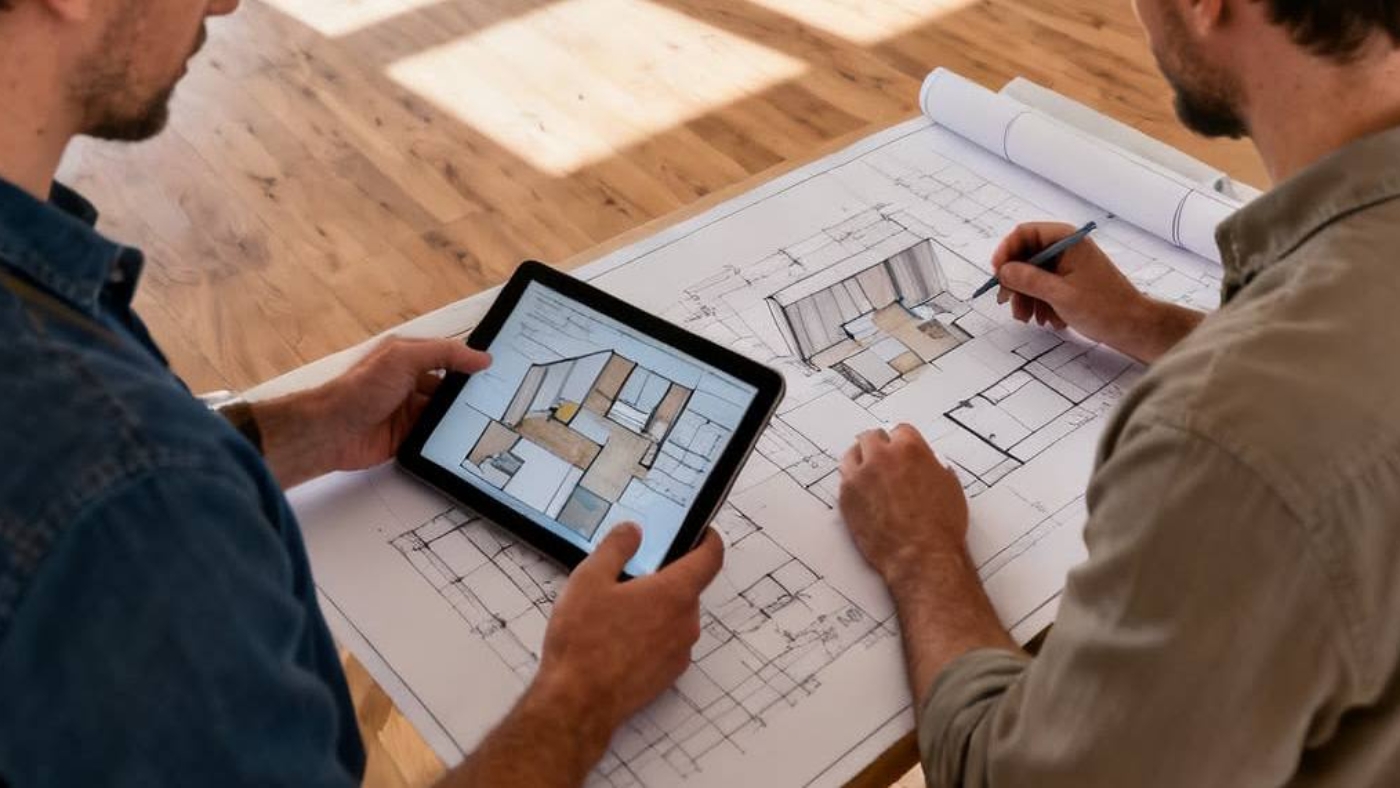
By 2030, the real estate market will be evaluated not only through price, square footage, and district prestige, but through a property’s ability to adapt to new lifestyle scenarios, climate conditions, digital habits, and changing expectations of comfort. At RentSale RealEstate, architect Raúl Llorente analyzes how buyer priorities are already shifting today: clients are becoming far more attentive to layout efficiency, energy performance, privacy, acoustics, material quality, and the real cost of long-term ownership. Properties that are considered simply “modern” today will soon compete under far more precise criteria.
The first major shift will be the growing importance of flexible layouts. Apartments and houses will need to adapt easily to remote work, family changes, guest scenarios, storage needs, relaxation, and future resale without expensive reconstruction. Narrow rooms, excessive corridors, poor zoning, and the absence of functional workspaces will reduce liquidity. At RentSale RealEstate, we analyze layout as one of the strongest indicators of future value because buyers are no longer willing to pay for square meters that cannot be used efficiently in everyday life.
Energy efficiency will become another defining factor. Rising costs of heating, cooling, electricity, and maintenance will turn operational expenses into a core part of property valuation. Buyers will increasingly examine window quality, solar orientation, thermal insulation, ventilation systems, engineering infrastructure, energy ratings, and opportunities to reduce utility costs. A house with an attractive interior but inefficient energy consumption will lose competitiveness against properties that deliver comfort through rational and predictable performance.
Acoustic comfort will take on a much larger role. Increasing urban density, ongoing construction, transportation pressure, and the expansion of mixed-use districts will make silence a significant premium factor. Buyers will pay closer attention to sound insulation in walls, windows, floor slabs, engineering systems, courtyards, and shared spaces. At RentSale RealEstate, we emphasize that by 2030 acoustics will no longer be treated as a secondary technical characteristic – it will become part of both the emotional and financial value of real estate.
Outdoor space will also be viewed differently. A balcony, terrace, yard, garden, rooftop, patio, or shared green zone will no longer be perceived as decorative additions but as essential components of quality living. Buyers will evaluate privacy, orientation, heat protection, leisure functionality, views, and ease of maintenance. In major cities especially, thoughtfully designed outdoor areas will significantly improve a property’s attractiveness and help it stand out among standard listings.
Technical reliability of buildings will receive far more scrutiny. Facades, roofing, elevators, ventilation, electrical systems, plumbing, drainage, security infrastructure, and materials used in common areas will become more important than superficial visual freshness. Buyers will be less willing to invest in properties that look new but require constant spending on hidden structural problems. At RentSale RealEstate, we believe real estate in 2030 will be assessed through its full lifecycle – not only acquisition cost, but ownership cost, rental potential, maintenance requirements, and future resale strength.
Demand for privacy will continue to intensify. Even in urban apartments, buyers will pay attention to the distance between windows, corridor density, number of units per floor, elevator access, entrance placement, bedroom isolation, and the ability to preserve personal space. For houses, this will mean more precise evaluation of land boundaries, fencing, tree placement, driveway design, and visual exposure to neighbors. Privacy will evolve from a luxury into a core component of psychological comfort.
Investment evaluation models will also change. Previously, investors could focus mainly on district, entry price, and projected rental income. In the coming years, that will no longer be sufficient. Market resilience, renovation flexibility, seasonality, operating expenses, tenant expectations, legal limitations, management quality, and a property’s ability to remain relevant through market cycles will matter far more. Simple models such as “buy low – rent high” will become less reliable for assets that fail to meet new living standards.
Buyer behavior itself is also evolving. People will respond less to surface-level presentation and increasingly ask direct questions: why is the property priced this way, what does maintenance cost, which materials were used, how quiet is it, how does it stay cool during summer, can the layout be changed, who manages shared areas, and how is the district expected to develop? At Rent Sale Real Estate, we see this as a transition from emotional purchasing toward a more mature decision model where architecture, economics, and everyday comfort are evaluated together.
Real estate in 2030 will outperform not because of one standout feature, but because of balance across multiple parameters: flexible layouts, energy efficiency, silence, privacy, high-quality outdoor areas, technical reliability, and strong investment logic. Properties already designed or selected with these factors in mind will gain a stronger market position because future buyers will seek not merely attractive housing, but resilient systems for living, working, relaxing, and preserving capital.
Previously, we wrote about how RentSale RealEstate evaluates residential outdoor space as a factor of comfort, status, and market appeal